
VIAVI TeraVM Virtualization Software-Only Test Solution for Virtualized and Cloud Networks
Software-only TeraVM test solution providing an elastic test bed for repeatable validation of virtualized, NFV and cloud networks.
- Cloud
- Amazon AWS, Google GCP, Microsoft Azure, Oracle OCI, Alibaba Cloud, OpenStack
- Hypervisors
- VMware ESXi, KVM (Ubuntu / RedHat)
- Containers
- Containers / Kubernetes – Google GKE, Amazon EKS
- Tunnelling overlays
- VxLAN, GRE; SR-IOV NIC passthrough
Overview
TeraVM is a software-only test solution from VIAVI. It provides an elastic test bed for software-defined testing with reliable and repeatable results.
TeraVM does not depend on a specific hypervisor or hardware platform. It runs on public clouds such as Amazon Web Services and Microsoft Azure, and on private cloud platforms such as OpenStack and OpenMano.
IP networks and services are moving from fixed physical appliances to virtualized functions and cloud platforms, and more carriers are expected to run virtualized functions on standard server hardware. Several developments drive this change: more vendors ship their functions as VNFs or containers that do not depend on a specific platform, NFV and SDN frameworks and APIs are being standardized, management and orchestration architectures are consolidating, and network functions now scale to handle terabytes of data flows.
Portable validation
Service providers that deliver new services as NFV service chains, scaling on demand for peak or busy-hour load, need validation that works across many combinations of hardware, virtualization layers and cloud platforms. TeraVM is portable, scalable software, so the same tests can run anywhere from the lab to the cloud.
Key Features
- Software-only solution independent of hypervisor and hardware platform
- Elastic test bed for software defined testing with reliable and repeatable results
- Simplified test delivery with web based configuration templates
- Central test library for sharing tests between users
- Visibility of all available test resources and reservation of assets
- Flexible licensing to enable global labs and scale on demand or in-time
- Management reporting showing total usage and test coverage
- Portable software for repeatable test coverage from the lab to the cloud
Specifications
| Cloud |
Amazon AWS, Google GCP, Microsoft Azure, Oracle OCI, Alibaba Cloud, OpenStack
As listed in the TeraVM Security data sheet
|
|---|---|
| Hypervisors |
VMware ESXi, KVM (Ubuntu / RedHat)
As listed in the TeraVM Security data sheet
|
| Containers |
Containers / Kubernetes – Google GKE, Amazon EKS
As listed in the TeraVM Security data sheet
|
| Tunnelling overlays |
VxLAN, GRE; SR-IOV NIC passthrough
As listed in the TeraVM Security data sheet
|
| Multi-cloud |
Distributed multi-cloud deployment support
As listed in the TeraVM Security data sheet
|
| REST API |
REST API for test management, real-time monitoring, and data export
As listed in the TeraVM Security data sheet
|
|---|---|
| Scripting APIs |
CLI, Perl, TCL, XML, Java API; Python, Jython
As listed in the TeraVM Security data sheet
|
| Integrations |
QualiSystems (CloudShell), Luxoft SDL, OpenStack integration; Cisco LaasNG, Cisco pyATS
As listed in the TeraVM Security data sheet
|
| License management |
System utilization reports and license management (Location, User, Testbed, usage stats, check-in timer)
As listed in the TeraVM Security data sheet
|
|---|---|
| Adaptive Engine |
Automatically find maximum capacity of Devices Under Test
As listed in the TeraVM Security data sheet
|
| Test profile portability |
Same test profile usable across multiple platforms
As listed in the TeraVM Security data sheet
|
| I/O support |
1/10/25/40/100/200 Gbps
As listed in the TeraVM Security data sheet
|
Specifications are taken from the manufacturer's documentation. See the datasheet for complete and current values.
Applications
- NFV service chain validation
- Virtualized network function (VNF) testing
- Public cloud performance testing
- Private cloud and OpenStack validation
- SDN solution validation
- Carrier migration to virtualized infrastructure
Documents & Resources
Related Products
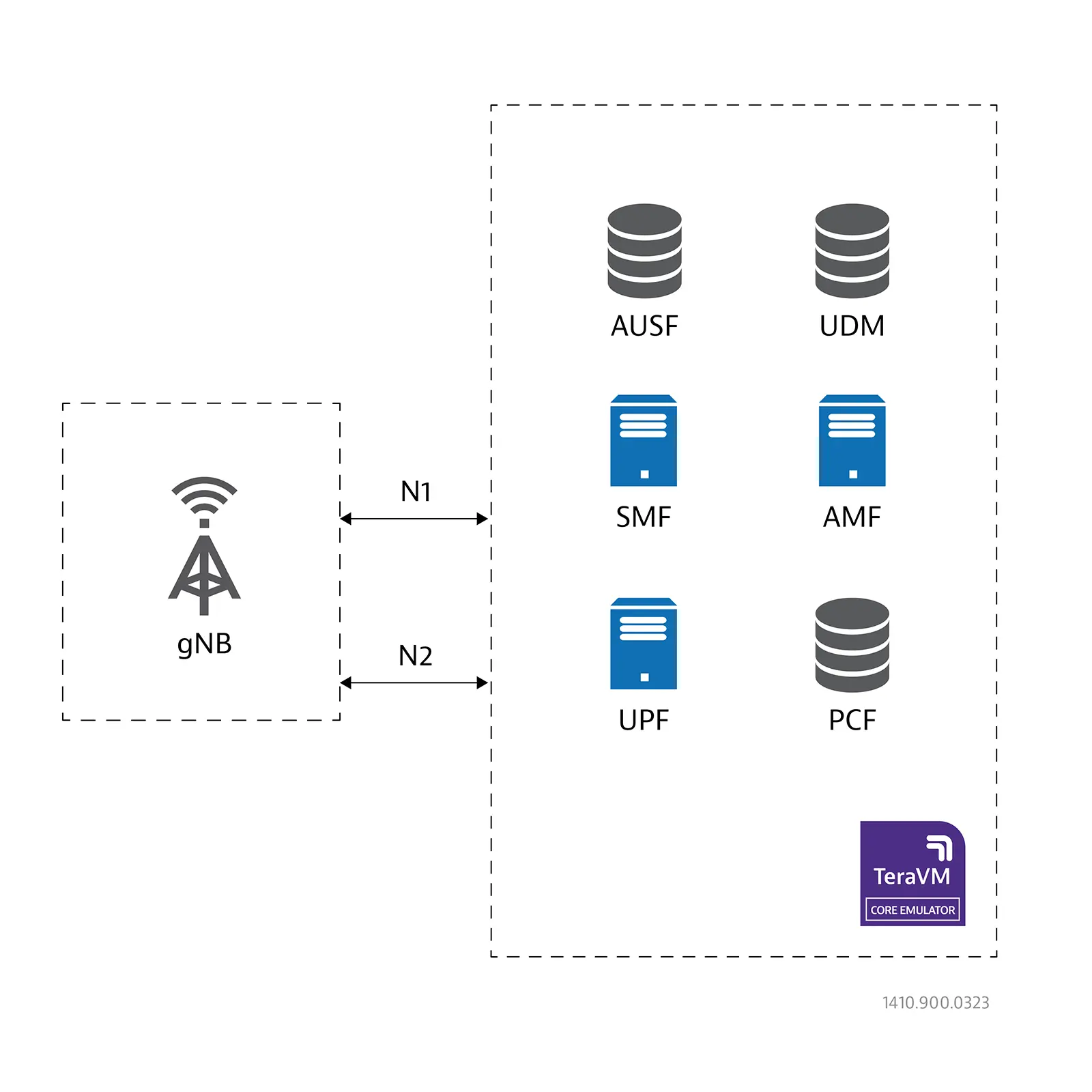
Virtualized 5G core network emulator that works with the TM500 test mobile for wrap-around testing of 5G gNBs in SA and NSA modes.
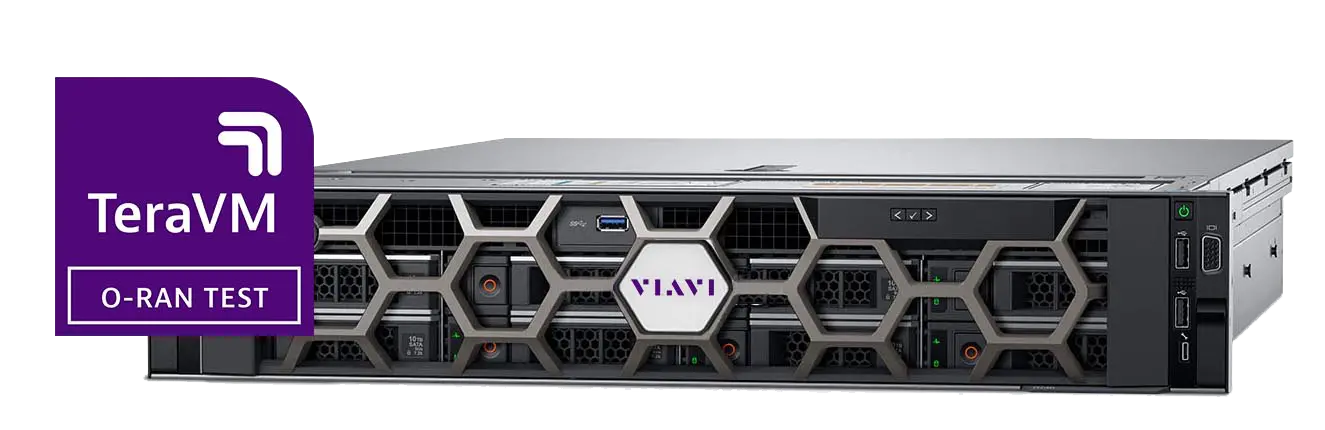
Software-based O-CU subsystem tester that emulates O-DUs, UEs and core networks over F1, X2/Xn and S1/NG for O-RAN O-CU validation.