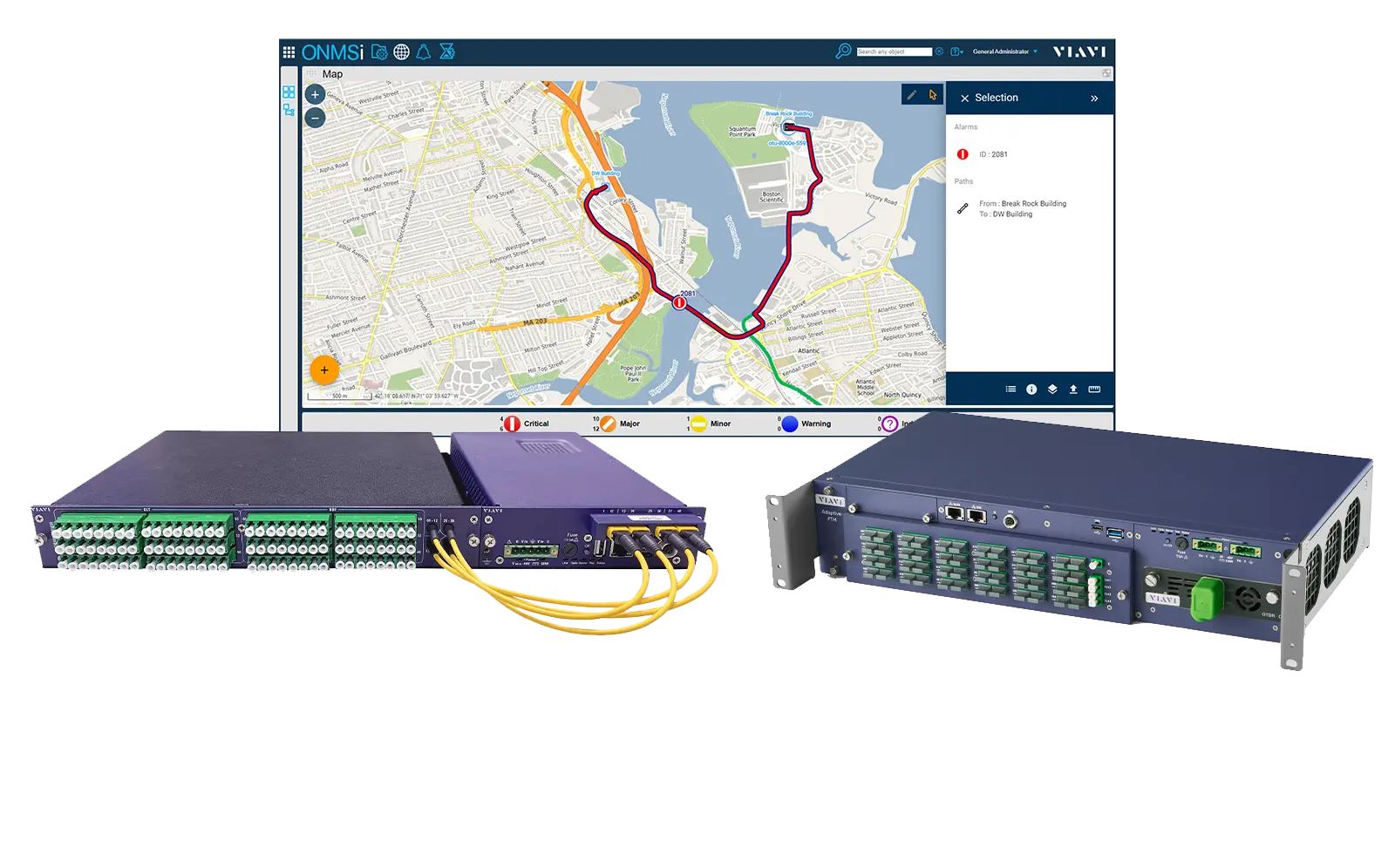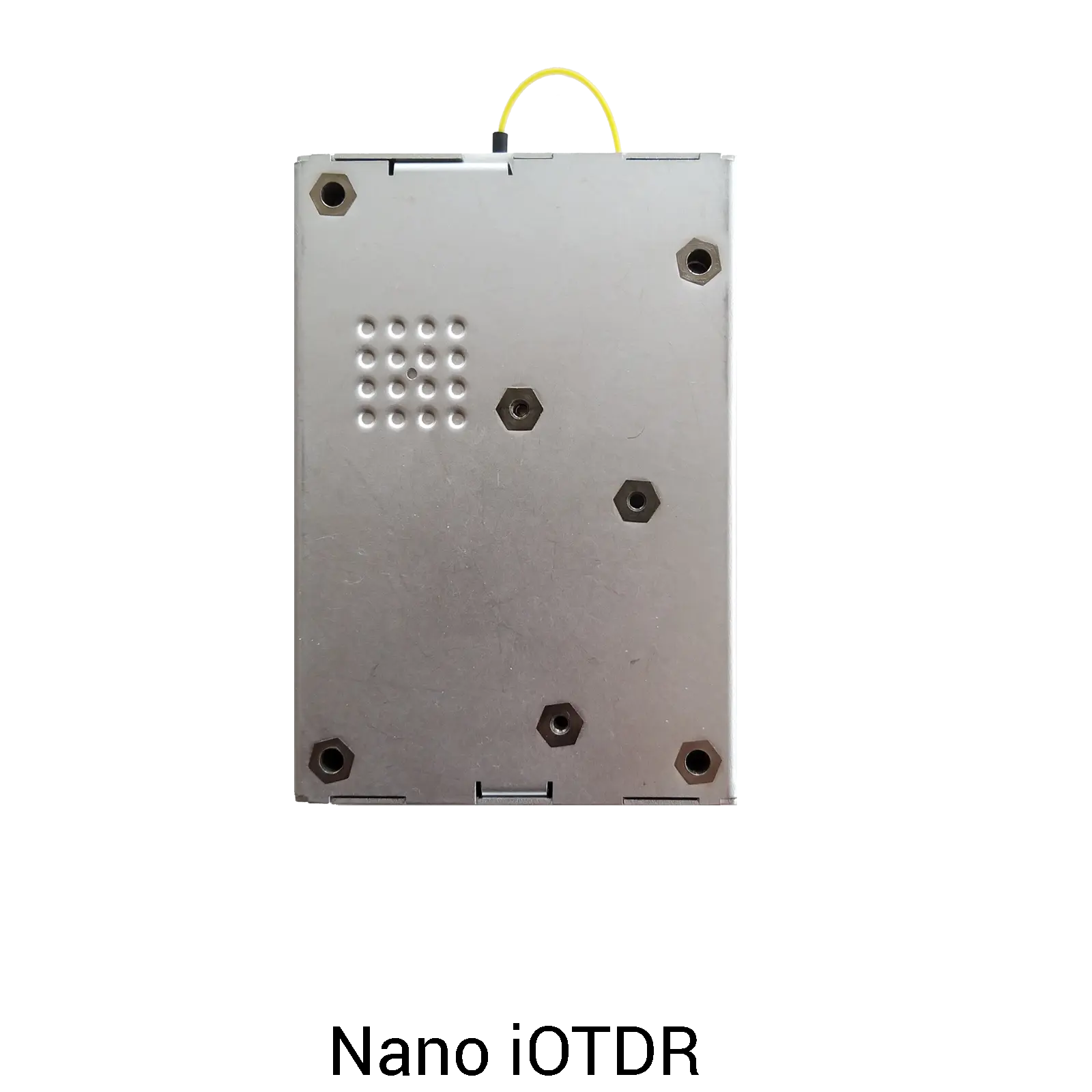
VIAVI Nano iOTDR Card Short Range Integrated OTDR for Network Elements
Compact integrated OTDR card for network elements, with 1610 nm wavelength, 32 dB dynamic range and up to 160 km distance range.
- Range
- Short Range
- Wavelength
- 1610 nm
- Wavelength accuracy
- ±5 nm
- Dynamic range
- 32 dB
Overview
The VIAVI Nano iOTDR Card is a compact integrated OTDR (iOTDR) card designed for network equipment manufacturers (NEMs) to embed in optical network elements such as amplifiers and switches. It provides in-service fiber testing so that operators can locate fiber faults that degrade network traffic, including physical faults that cause latency, jitter, service quality issues and outages.
The card is part of the VIAVI Nano and Micro iOTDR card family. The Nano card is the short-range model, operating at 1610 nm, and is controlled via an Ethernet 10/100 interface. It is supplied with a software library covering a range of remote fiber test use cases, including fiber characterization, fault demarcation, intrusion detection and tracking fiber degradation for preventative maintenance.
VIAVI professional services can assist integration teams while the Nano iOTDR card is integrated and tested within a larger system. The card is intended for use in xWDM, FTTX, PON, XGS-PON and 4G/5G fiber networks, as well as dark fiber testing.
Key Features
- Short range high accuracy integrated OTDR
- Short dead zone
- In-service fiber testing
- Controlled via Ethernet interface
- Large software library for remote fiber test use cases
- High distance accuracy
- Low power consumption
- Pluggable hardware package for integration into optical network elements
- Support from VIAVI OTDR experts for development teams
- For use in PON, XGS-PON, 5G, DWDM, CWDM and dark fiber testing
- 2021 Lightwave Innovation Award winner (Micro and Nano iOTDR cards)
Specifications
| Range |
Short Range
The product web page labels the Nano card as Medium Range; the datasheet specifies Short Range
|
|---|---|
| Wavelength |
1610 nm
Laser at 25°C and measured at 10 µs; typical at 25°C
|
| Wavelength accuracy |
±5 nm
Laser at 25°C and measured at 10 µs
|
| Dynamic range |
32 dB
One way difference between the extrapolated backscattering level at the start of the fiber and the RMS noise level, after 3 minutes averaging and using the largest pulse width
|
| Pulse width | 10 ns to 10 µs |
| Event dead zone |
1.5 m
Measured at ±1.5 dB down from the peak of an unsaturated reflective event using the shortest pulse width
|
| Attenuation dead zone |
5 m
Measured at ±0.5 dB from the linear regression using a -55dB type reflectance and using the shortest pulse width
|
| Laser safety | Class 1 |
|---|---|
| Number of data points | Up to 512,000 |
| Sampling resolution | From 4 cm |
| Distance range | Up to 160 Km |
| Distance accuracy | ±1m ±Sampling resolution ± distance * 10-5 |
| Dimensions | 98.5 x 67.5 x 16.5 mm |
|---|---|
| Operating case temperature | -5 to 75°C |
| Storage temperature | -40 to 85°C |
| Humidity | 5 to 85% without condensing |
| EMC | EN61326-1, EN6100-3-2 |
| Interfaces | Ethernet 10/100 |
| Power consumption |
5.1 W
Typical at 25°C
|
| Power consumption (standby mode) | 10mW |
Specifications are taken from the manufacturer's documentation. See the datasheet for complete and current values.
Applications
- Fiber characterization
- Fiber monitoring
- Tapping security intrusion detection
- Fault demarcation
- Raman amplified link test
- Fiber degradation tracking for preventative maintenance