fX3 Quint-speed 6-port Module FX3-QSFP28-6-150A 100/40/10G QSFP28 Test Module
Six-port QSFP28 TestCenter Layer 2-3 test module with 100G, 40G and 10G Ethernet speed modes.
- Frame time-stamp resolution
- 2.5 ns
- External time sources
- GPS and CDMA-based, IEEE 1588v2 and NTP packet-based, and TIA/EIA-95B-based external time sources are supported
- Default time source
- Stratum-3 rated oscillator is the default time source
- Inter-module and inter-chassis time synchronization
- Ports in the same chassis are locked to the internal timing source. For separate systems: timing chain synchronization with +/- 20ns accuracy; synchronized via GPS or CDMA network; using NTP or PTP packet-based approaches
Overview
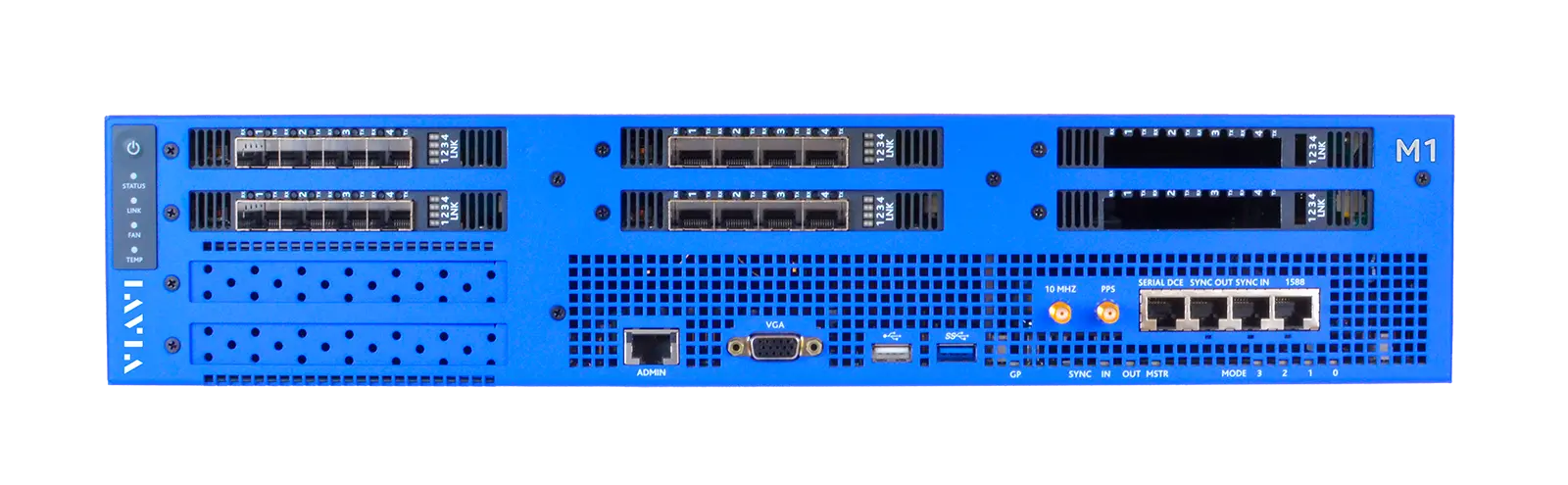
TestCenter 100G test solutions provide Layer 2-3 validation for data center, service provider and enterprise networks built on 100G Ethernet. The family is centered on the TestCenter chassis platforms with dX, fX, mX and pX 100G test modules, plus the M1 compact appliance, and supports modular test environments for performance validation, interoperability testing and long-term network evolution. The FX3-QSFP28-6-150A is one of the orderable configurations in this family.
Two platform types are offered. The modular chassis (N12U mainframe or N4U compact) is intended for high-port-density environments and large-scale Layer 2-3 validation with centralized lab deployment. The M1 compact appliance is a 2U unit for rapid turn-up scenarios where simplicity and fast deployment matter, while keeping the same TestCenter workflow and test depth.
Timing and software
Both platforms are built on the TestCenter solution framework and use interchangeable dX, fX, mX and pX multi-speed modules or M1 network interface configurations. Timing is derived from a Stratum-3 rated oscillator with 2.5 ns frame time-stamp resolution, and external GPS, CDMA, IEEE 1588v2 and NTP time sources can be used for inter-chassis synchronization. TestCenter protocol emulation and test packages are available as separately licensed software, and the hardware integrates with TestCenter 400G to 1.6T platforms and TestCenter Virtual.
Key Features
- High-density Ethernet testing with dX, fX, mX and pX test modules or the M1 appliance with a variety of NIC configurations
- Regression testing and long-term network lifecycle assurance
- Line-rate traffic generation and analysis across large port counts
- Repeatable measurement of latency, jitter, throughput and packet loss
- Standards-aligned validation for multi-vendor interoperability
- Integration with 400G to 1.6T TestCenter hardware and TestCenter Virtual environments
- Stratum-3 rated oscillator as the default time source
- 2.5 ns frame time-stamp resolution
- GPS, CDMA, IEEE 1588v2, NTP and TIA/EIA-95B external time sources supported
- TestCenter protocols and test packages available as separately licensed software
- Six QSFP28 ports, each using four 25G electrical lanes
- FPGA-based mode switching of the packet generation and analysis engine between speed modes
- Hardware speed options to customize module speeds and features
- Enable and disable Clause 74 BASE-R FEC, Clause 91 RS-FEC, Clause 108 RS-FEC, Auto Negotiation and Link Training
- Intelligent power control to shut down unused test modules with faster boot time
- Hardened system proven for testing from a single port up to 2,100 ports
- Emulated devices, traffic and rates can be changed on the fly during a test
- Sub-microsecond latency measurement with 2.5 ns precision and resolution
- 19 different traffic scheduling algorithms
- Autonomous Flow Tracking (AFT) for massive flow visualization in 100G speed mode
- Real-time traffic filters with simultaneous multi-metric collection
- Dynamic views with multi-metric extraction, sorting and operation in real time or post-test
- Full packet capture with trigger and filtering controls
Specifications
| Frame time-stamp resolution | 2.5 ns |
|---|---|
| External time sources | GPS and CDMA-based, IEEE 1588v2 and NTP packet-based, and TIA/EIA-95B-based external time sources are supported |
| Default time source | Stratum-3 rated oscillator is the default time source |
| Inter-module and inter-chassis time synchronization |
Ports in the same chassis are locked to the internal timing source. For separate systems: timing chain synchronization with +/- 20ns accuracy; synchronized via GPS or CDMA network; using NTP or PTP packet-based approaches
NTP/PTP approaches require supporting controller version
|
| Maximum support speed | 100/40/10G |
|---|---|
| Maximum ports per slot |
6/6/24
100G/40G/10G
|
| Maximum ports per SPT-N12U chassis |
72/72/288
100G/40G/10G
|
| Port density | 6-port QSFP28 module options |
| Electrical interface | Six QSFP28 ports that utilize four 25G electrical lanes each |
| Host chassis | Modules get their transmit line clocking and time-stamping from the control modules on the SPT-N4U and SPT-N12U |
| Media support |
100G: 100GBASE-SR4, 100GBASE-CR4, 100GBASE-LR4, plus additional MSA PMDs; 50G: 25/50G Consortium 50GBASE-CR2; 40G: 40GBASE-SR4, 40GBASE-CR4, 40GBASE-LR4; 25G: 802.3by 25GBASE-CR, 25GBASE-CRS, 25GBASE-SR; 10G: 10GBASE-SR, 10G Copper DAC; QSFP28 to SFP28 breakout cable options
Support varies by module speed mode
|
| FEC, auto-negotiation and link training |
Auto-Negotiation and Link Training for 100G, 50G, 40G and 25G; Clause 74 BASE-R FEC, Clause 91 RS-FEC, and Clause 108 RS-FEC; 25/50G Consortium 50GBase-R FEC CL74, 25/50G Consortium 50GBase RS-FEC CL91; IEEE 25GBASE CR CL74, CL108, CR-S CL74, SR FEC CL108; 25/50G Consortium 25GBase-R FEC CL74, 25/50G Consortium 25GBase RS-FEC CL91
Support varies by module speed mode
|
| User reservation | Per-port reservation |
|---|---|
| Transmit/receive streams per port | 64k TX and 128k RX for all speeds |
| VFDs and variable fields | 6 VFDs available for each 1k (100G) and 512 (50/40/25/10G) stream templates; 4m route insertion table entries for all speeds |
| Scheduler mode support | Port Based (traffic scheduling handled at the port level); Rate Based (key parameters determined at the port level with division among the individual stream blocks); Priority Based (scheduling determined at the stream block level using user-assigned priorities, precise scheduling of CBR and bursty traffic for QoS testing); Manual Mode (manual control of stream sequence) |
| Frame length range and controls | 100% line rate for frames of 64-16383 bytes controlled by fixed, increment, decrement, random and IMIX modes |
| Statistics | Nearly 50 transmit stats per port reported in real time, including L1-4 counters and rates and checksum and CRC errors; over 40 real-time measurements per stream including advanced sequencing, latency, jitter and data integrity |
| Autonomous Flow Tracking (AFT) |
Supported on fX3 6-port 100G Module only (100G speed mode)
Requires AFT package BPK-1407
|
| Transmit clock adjustment | +/- 100 PPM in 1 PPM increments per 2 100G ports |
| Capture |
1MB per 100G or 40G port; 512kB per 50G port; 256kB per 25G port
Capture software includes sophisticated trigger and filtering controls
|
| Histogram modes | Port-level histogram modes for latency, jitter, interarrival time, frame length, sequence run length and sequence difference check |
| Enterprise and data center switch protocol support |
OpenFlow 1.3 / 1.0 switch and controller emulation testing; all major IPv4 and IPv6 unicast and multicast routing protocols, IGMPv1/v2/v3, MLDv1/v2, LACP, STP, RSTP and MSTP; data center: VXLAN, EVPN, DCBX, FCoE, FIP, 802.1Qbb
Separately licensed packages; sample list
|
|---|---|
| Service provider protocol support |
WAN SDN: PCE-P, BGP-LS, BGP Flow Spec and Segment Routing for ISIS, OSPF and BGP; NFV: vSwitch, BGP v RouteReflector, vBNG, vCPE and vRouter; Routing and MPLS: RSVP-TE, LDP, VPLS-LDP, VPLS-BGP, BGP/MPLS-VPN, EVPN (RFC 7432), PBB EVPN, mVPN, NG MVPN, GTM, BFD, MPLS BFD, LSP Ping, TWAMP and PWE3 (RFC4447); Access: ANCP, PPPoE, DHCP, L2TP, L2TPv3, IGMPv1/v2/v3, MLDv1/v2, DHCP-PD and PPPoEv6; Carrier Ethernet: LACP, STP, RSTP, MSTP, 802.1ag CFM, Y.1731, PBB, PBB-TE, Link OAM; Mobile Backhaul: MPLS-TP, 1588v2 and Synchronous Ethernet
Separately licensed packages; sample list
|
| Operating temperature | 15 C - 35 C, 20% - 80% RH (non-condensing) |
|---|
Specifications are taken from the manufacturer's documentation. See the datasheet for complete and current values.
Applications
- Large-scale data center and core network validation
- Interoperability and acceptance testing across switches, routers, optics and cables
- Regression testing through software upgrades, hardware refreshes and topology changes
- Service provider core and edge routers
- Data center top-of-rack, spine and core switches
- Carrier Ethernet services (Ethernet OAM, MPLS-TP, VPLS, PWE3 pseudowires)
- Device benchmarking per IETF RFC 2544, RFC 2889 and RFC 3918
- Functional and performance testing of data center and service provider network infrastructure
- Multicast VPN, EVPN and MPLS VPN service validation
Options & Accessories
| Option | Description |
|---|---|
| HWO-FX3-QSFP28-6-50G | 50G Hardware Speed Option for FX3-QSFP28-6 — Adds a new speed to a purchased base package |
| HWO-FX3-QSFP28-6-25G | 25G Hardware Speed Option for FX3-QSFP28-6 — Adds a new speed to a purchased base package |
| BPK-1407 | Autonomous Flow Tracking (AFT) Package — Only supported on fX3 6-port 100G speed mode |
| ACC-6095A | Optical transceiver QSFP28 100GBASE-SR4 MMF 850NM |
| ACC-6096A | Optical Transceiver QSFP28 100GBASE-LR4 SMF 1310NM |
| ACC-1034A | Copper DAC QSFP28 100GBASE-CR4 1M |
| ACC-1035A | Copper DAC QSFP28 100GBASE-CR4 3M |
| ACC-1038A | Copper DAC QSFP28 100GBASE-CR4 5M |
Documents & Resources
Related Products

Unified delivery platform for VIAVI L2-7 network and cloud testing with centralized licensing, asset management and web-based test apps.
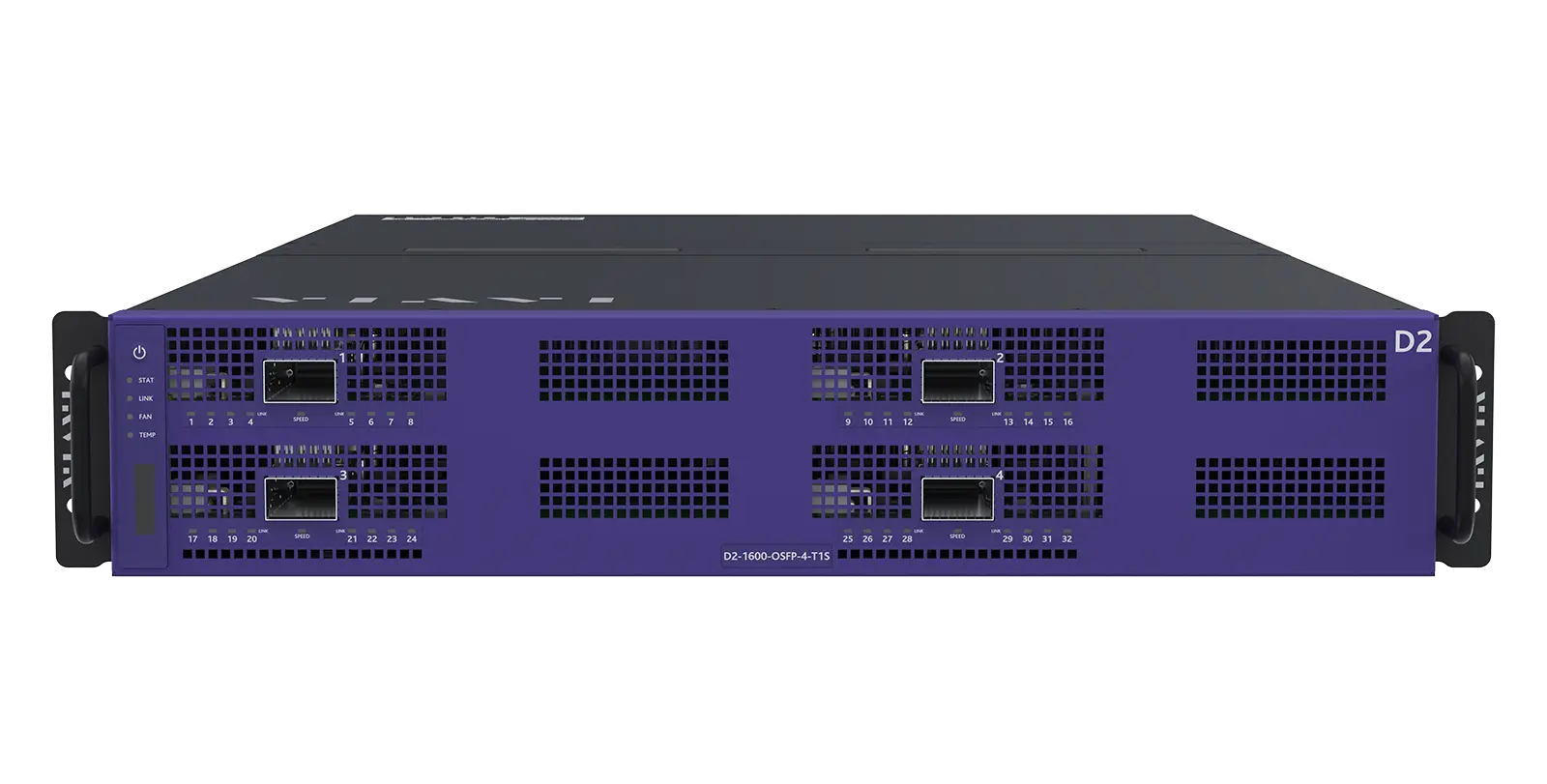
4-port OSFP1600 TestCenter appliance generating up to 6.4 Tbps of Layer 2-3 and AI workload test traffic from 100G to 1.6T.
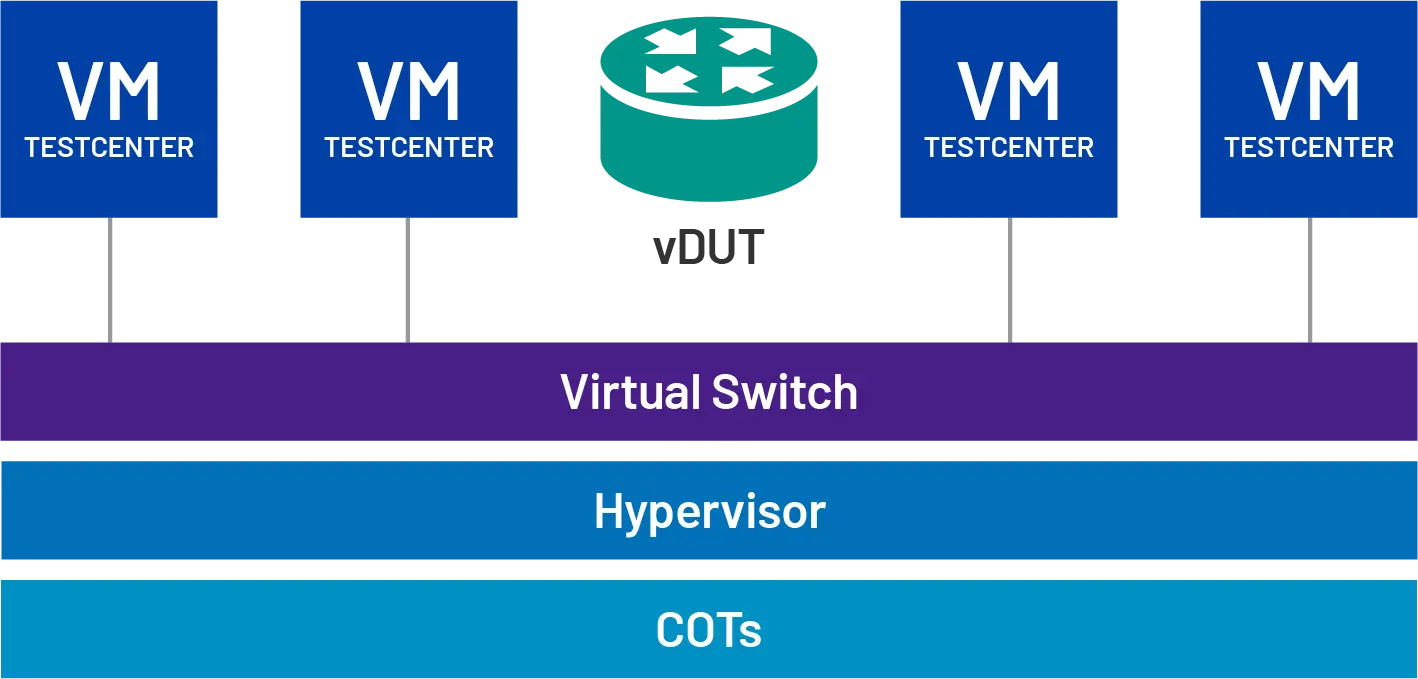
Software-based L2–L7 network test solution for validating the performance, scale and resiliency of virtualized and cloud network services.